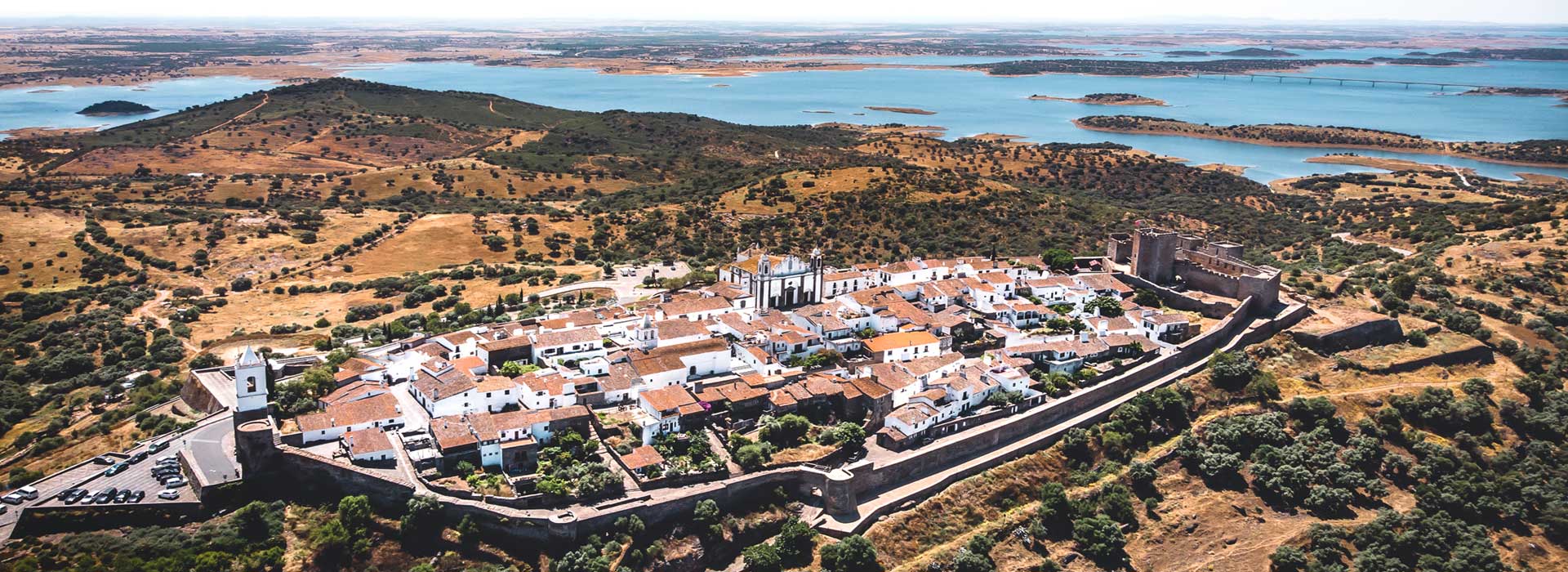


Monsaraz is known locally as "Ninho das Águias", which translates as "Eagles' Nest" and deservedly so. From its vantage point high above the Alentejan plains and the Alqueva Reservoir, the village has stood sentinel against invading armies for centuries. The village itself consists of a couple of streets that run parallel along the length of Monsaraz constrained within 16th-century ramparts. Monsaraz retains its enchanting medieval charm. Cobbled alleys are lined with restored whitewash houses with outdoor staircases and wrought-iron balconies. Off-shooting lanes tempt investigation where craft shops display their wares on the walls outside.
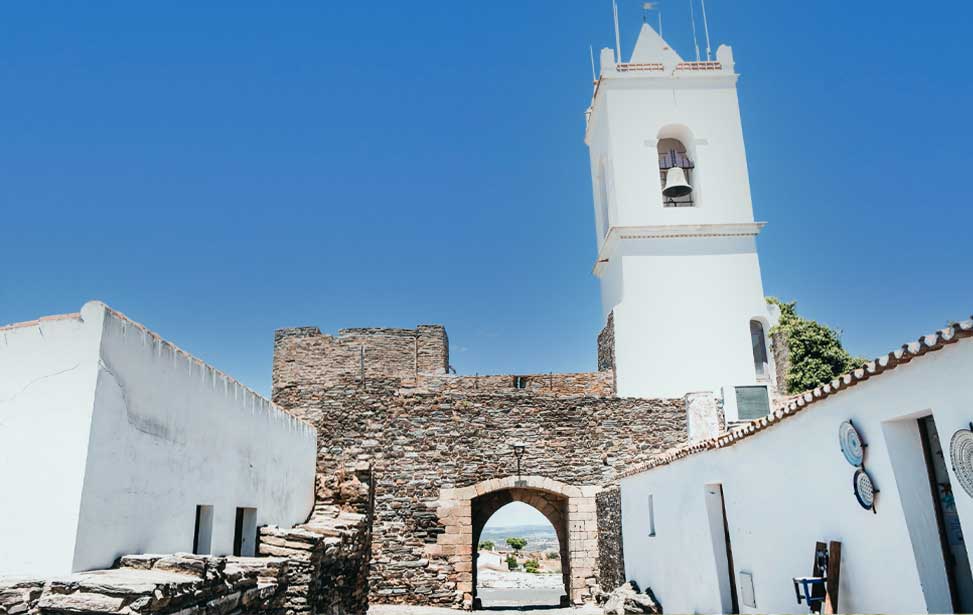
| Porta da Villa
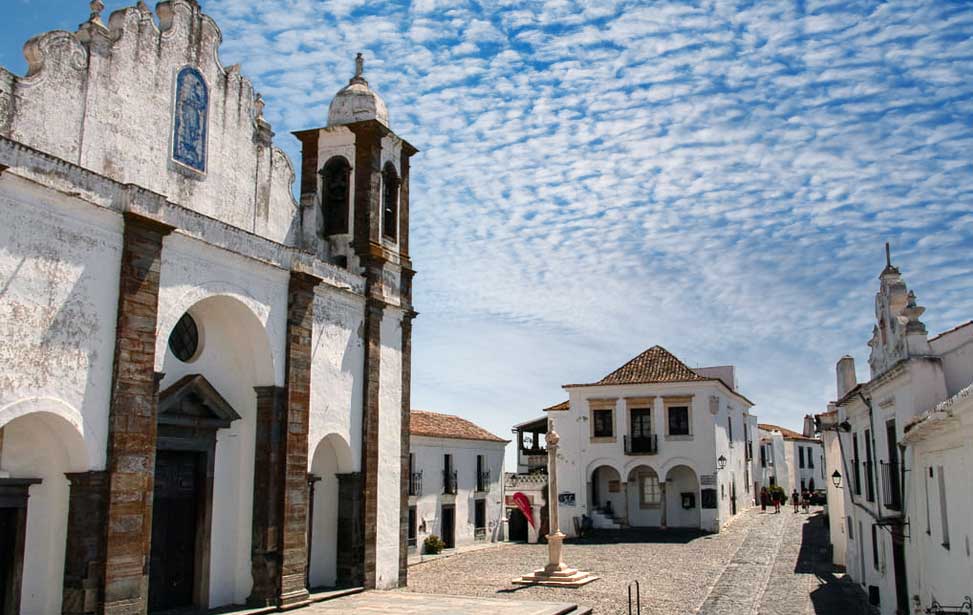
| Largo Dom Nuno Álvares Pereira
Monsaraz was first fortified by the Knights Templar following taking the villages from the Moors in 1232. However, the village's strategic importance has been exploited by previous peoples since pre-history and is one of the oldest Portuguese settlements in southern Portugal. Four thousand years ago the Monsaraz region was an important centre of megalithic culture and various dolmens, menhirs and stone circles have survived. Since then it has successively been occupied by the Romans, Visigoths, Arabs, Mozarabs, Jews, and since the Reconquista, Christians. Today the village is home to just a few hundred people as the fortified walls restrict the growth of Monsaraz.
The main entrance into the village from the car park outside the ramparts is through the Porta da Villa gateway. The portal is guarded on each side by two turrets, one is crowned by a whitewashed belltower.
The Rua Direita is the main street that leads to the Largo Dom Nuno Álvares Pereira, the beating heart of the village. On the periphery of the square, you can find eateries and accommodation. The curious 18th-century pillory (Pelourinho) is a replacement, the original was destroyed during an earthquake in 1755. It stands on a square base of three steps and the column is topped by a globe.
The large Renaissance church that dominates one side of the square is the Igreja de Nossa Senhora da Lagoa. It was built in the 16th century to the design of the architect Pêro Gomes. It replaces a 13th-century gothic original whose burial space was deemed inadequate following an outbreak of the plague. Three front portals lead into the three naves and are supported by four Tuscan columns. Above the front portals and between the bell towers there's a tiled panel depicting Our Lady of Immaculate Conception. Inside the High Altar is composed of gilded woodcarvings containing two wooden sculptures representing St. Augustine and St. Monica. Here too is the tomb of Gomes Martins Silvestre, a Templar Knight and first Alcaide (Mayor) of Monsaraz. This sepulchre is carved from marble sourced locally from Estremoz. Seventeen sculpted figures decorate the front representing a funeral procession. | 38º 26' 35.1" N | 07º 22' 50.2" W.
On the highest region of Monsaraz are the remains of the 14th-century castle. It was built on the order of King Dinis following the Christian reconquest of the village. Later extensions encompassed the whole village and defensive towers were added.
During the Restoration War in the 17th century, Vauban defences were added under the town walls. A climb up the granite castle's battlements and keep with be rewarded by the fantastic views over the Alentejan plains and the reservoir beyond. Early in the 19th century, the courtyard of the castle was converted into a bullring.
FREE | Largo do Castelo, Monsaraz 7200-175, Portugal. | 38º 26' 32.6" N | 07º 22' 43.4" W

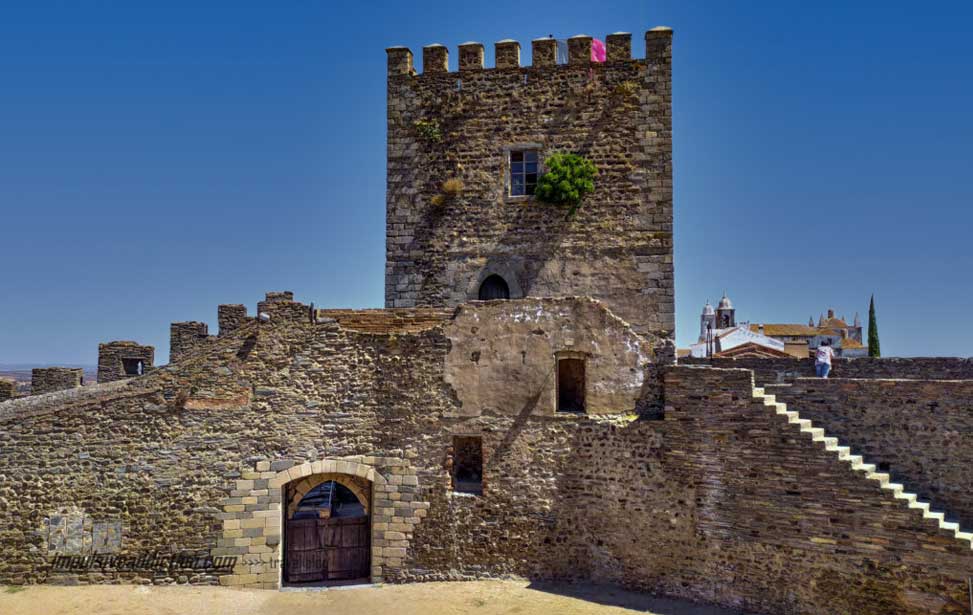
| Monsaraz Castle
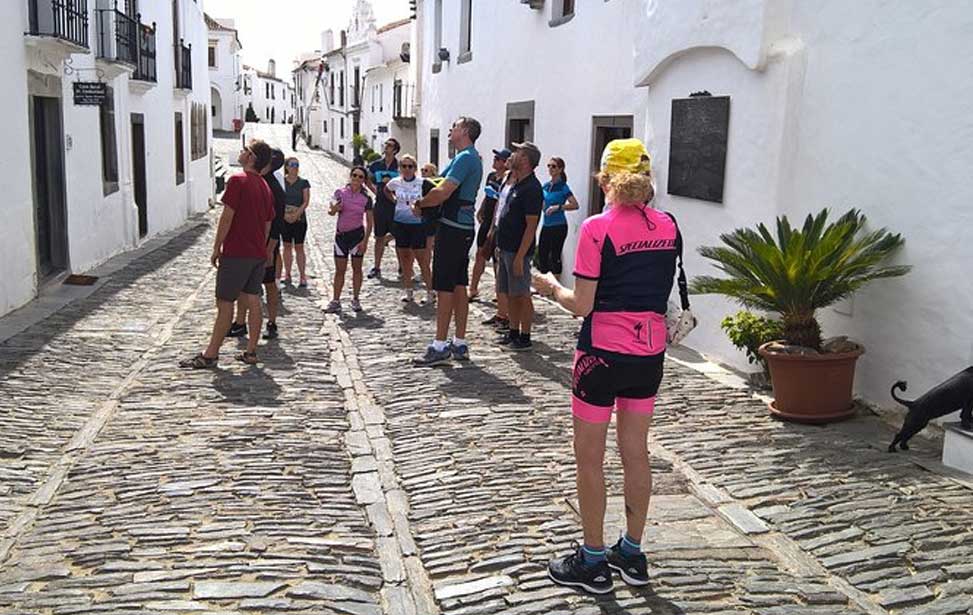
This experience with a local historian is unique. Learn about the history of the various cultures that helped build Monsaraz and the Alentejo. From prehistory to the present day. From Archeology to traditions that persist. Little stories that only the locals know. We highlight the Alentejo architecture and the popular religion that it hides. From Monsaraz we will see the Great Lake of Alqueva, Spain and the border. An immense landscape of wars, smuggling and an immense humanised rural world for thousands of years.
Book Online ►
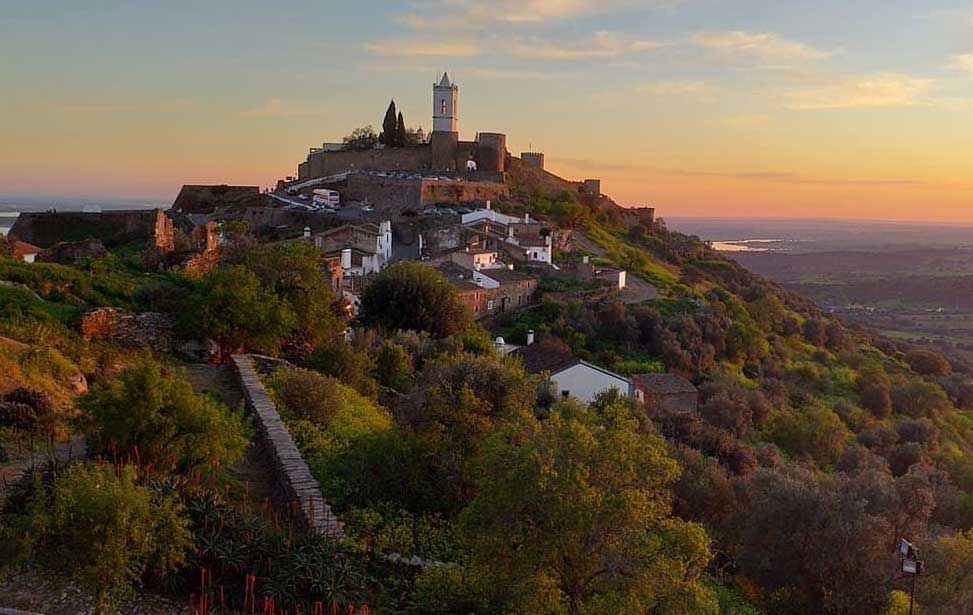
Visit the ancient city of Évora, a UNESCO Heritage Site, be enchanted by the medieval village of Monsaraz bathed by the largest reservoir in Europe. Enjoy the landscape as you taste a regional wine. In times that call for extraordinary measures, rest assured our Team at Tugatrips - A safe and clean certified enterprise – has taken all measures to give you the confidence so that you and your loved ones can enjoy a relaxing experience! We do the best tours because we do it with passion!
Book Online ►
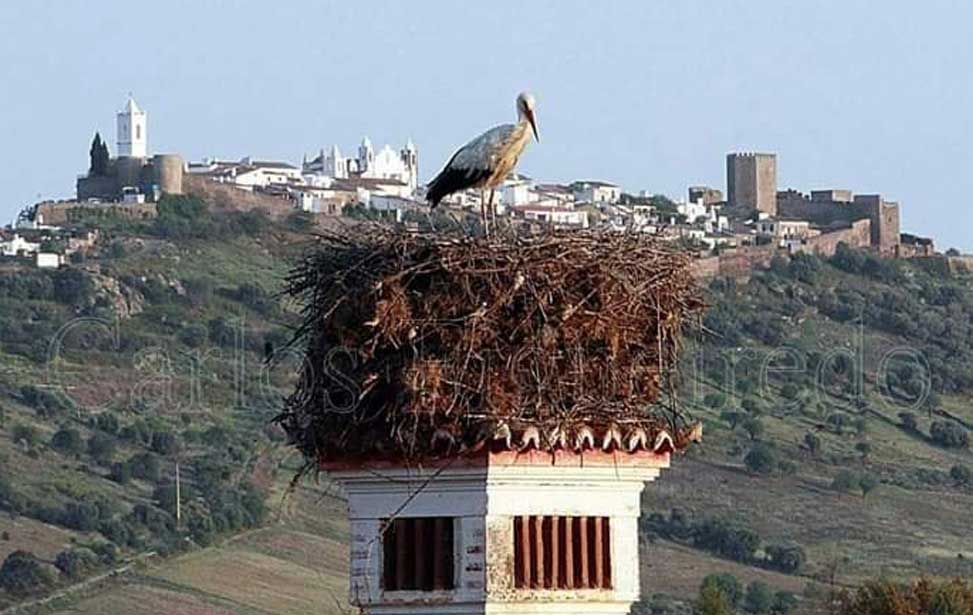
Sip your way through the Évora and Monsaraz countryside on this full-day private wine tasting tour. Avoid the hassle of travelling with a group on this private tour. Your professional guide and driver will escort you through the bucolic Alentejo countryside, considered one of the best wine regions in the country. Sample a variety of wines from multiple authentic wineries, as you go at your own pace. A private guide offers a more personalised experience. Learn about the history of Alentejo’s wine industry from your knowledgeable guide. Stroll through the quaint Portuguese villages of Évora and Monsaraz. Pick up/drop off from Lisbon.
Book Online ►
When is a stone circle not a stone circle? When it's the Cromeleque do Xerez. This curious megalithic monument is square-shaped and dates back about 5000 years. The 50 or so stones are short compared to other megalithic monuments in the area standing just one a metre. In the centre, a larger menhir stands four metres tall. Its phallic shape hints the site was used in fertility rituals. Its true alignment has been lost after the whole monument was relocated after the construction of the massive Alqueva dam in 2004.
Rua da Orada, 7200-173, Monsaraz, Portugal. | 38° 27' 12.3" N | 07° 22' 15.4" W
Two kilometres north is the Menhir of Bulhoa, a solitary standing stone. For a long time, it was broken into two pieces, and the base laid on the ground unnoticed until it was discovered in 1970. The top half was used in a nearby wine press. It was re-erected in 1971 and now stands four metres tall. It's believed the menhir dates from the 5th or 6th millennia BC which would make it the oldest monument in the region.
38° 27′ 44.1″ N | 07° 22′ 58.5″ W
Two further kilometres North is the Menhir of Outeiro and at 5.6 metres is the second largest in Portugal, second only in size to the Menhir Meada, near Castelo de Vide. All in all, around 130 Neolithic sites have been recorded in the surrounding Monsaraz countryside albeit some sites are now underwater following the flooding of the Alqueva reservoir. | 38° 28' 13.1" N | 07° 23' 37.2" W
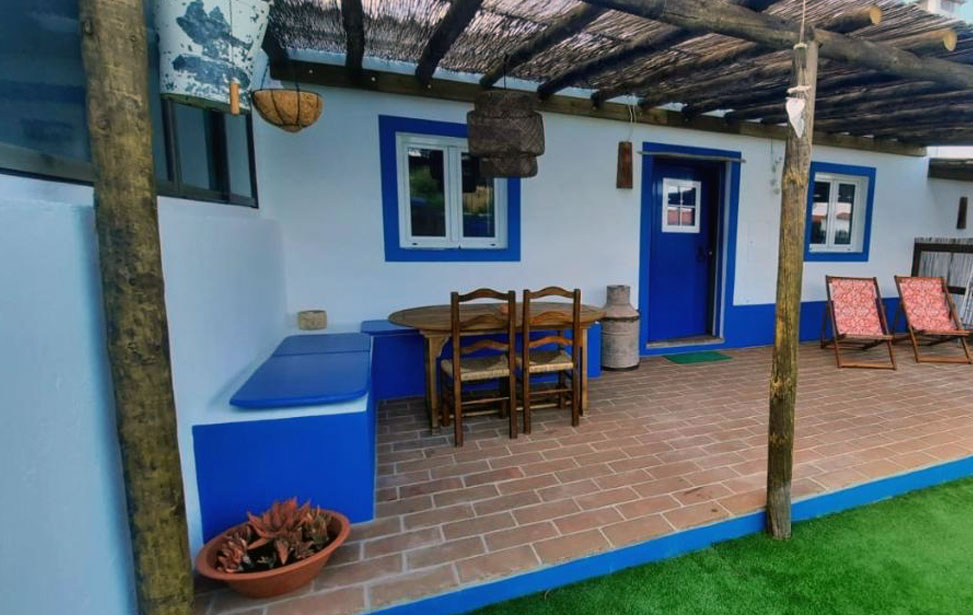
A two bedroom country house a short distance from Monasaraz. [ Check Availability ► ]
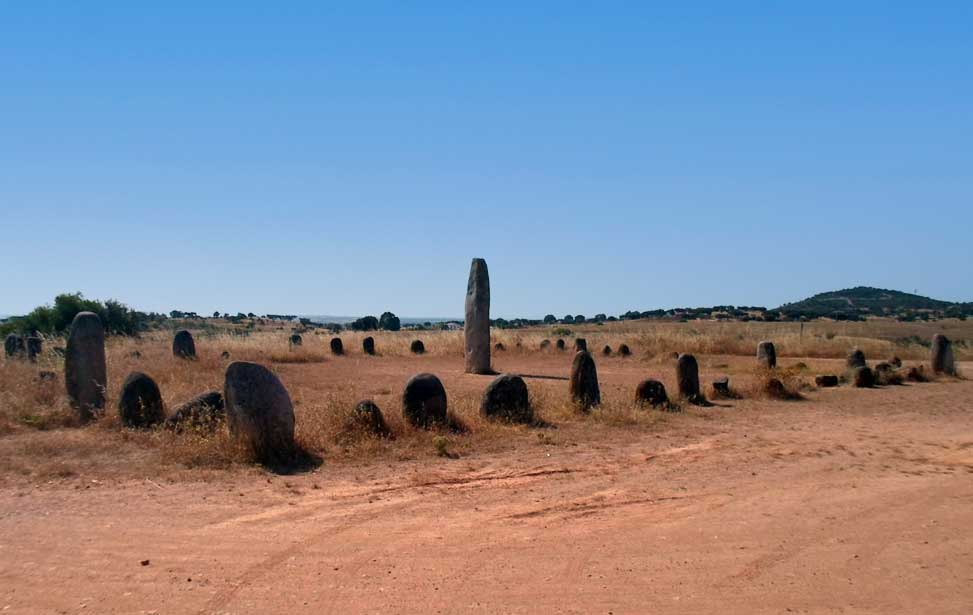
| Cromeleque do Xerez
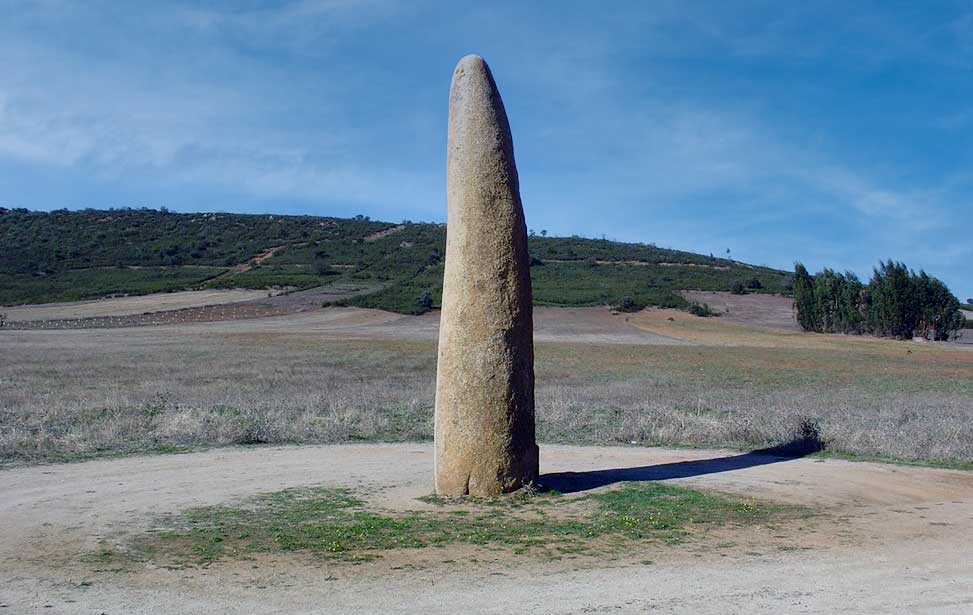
| Menhir of Outeiro
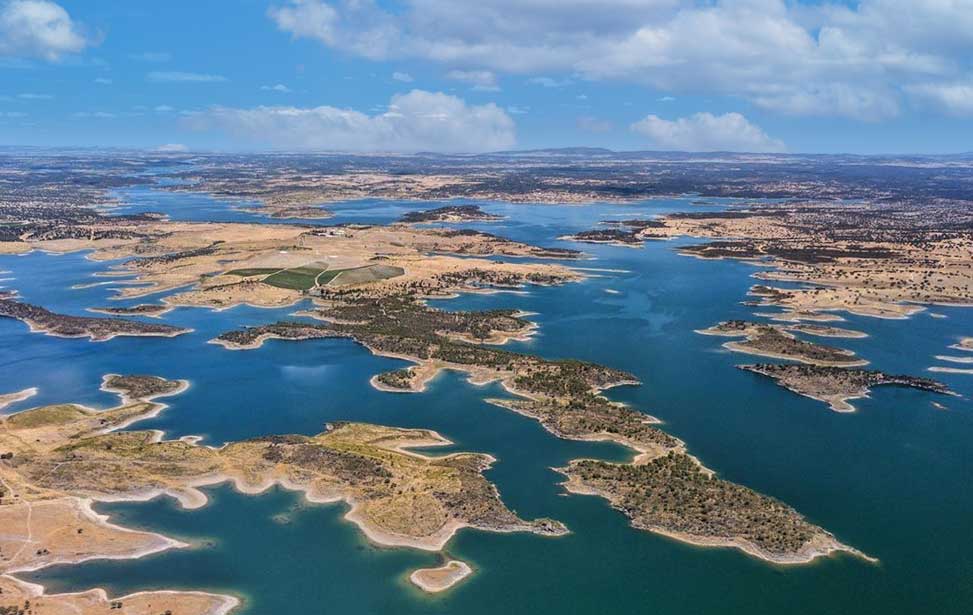
| The Alqueva Reservoir
In 2002 the Alqueva dam was built across the River Guadiana to supply the region with a renewable source of power and a much-needed reservoir for irrigation and drinking water for over 200,000 souls. In 2010 the artificial lake reached its maximum capacity and became the largest man-made body of water in Europe. With a total surface area of 250 km² (100 miles²) a perimeter of 1100 km (680 miles), and 83km (52 miles) long. Crossing over into Spain the Alqueva lake has also brought amazing scenery to the region. Where once there were olive groves and cork oaks, there is now a watery landscape with excellent opportunities for outdoor activities such as sailing, water-skiing and wakeboarding, canoeing and kayaking. There are marked trails for hikers and cyclists as well as picnic areas and viewpoints for less vigorous persists. The Centro Náutico De Monsaraz by the beach is the local embarkation point for cruises on the reservoir.
Alqueva was designated the world's first Starlight Tourism Destination by the Starlight Foundation who is supported by UNESCO, UNWTO and IAC. 'Starlight' destinations are sites characterised by excellent views of the night sky, untainted by light pollution, where visitors can enjoy unique and unparalleled opportunities to experience the beauty of the Universe. In Alqueva the sky has good atmospheric conditions for stargazing most of the year. Such skies are disappearing in Europe, where most of the population has no longer the privilege to observe an unpolluted sky. [ More About ► ]
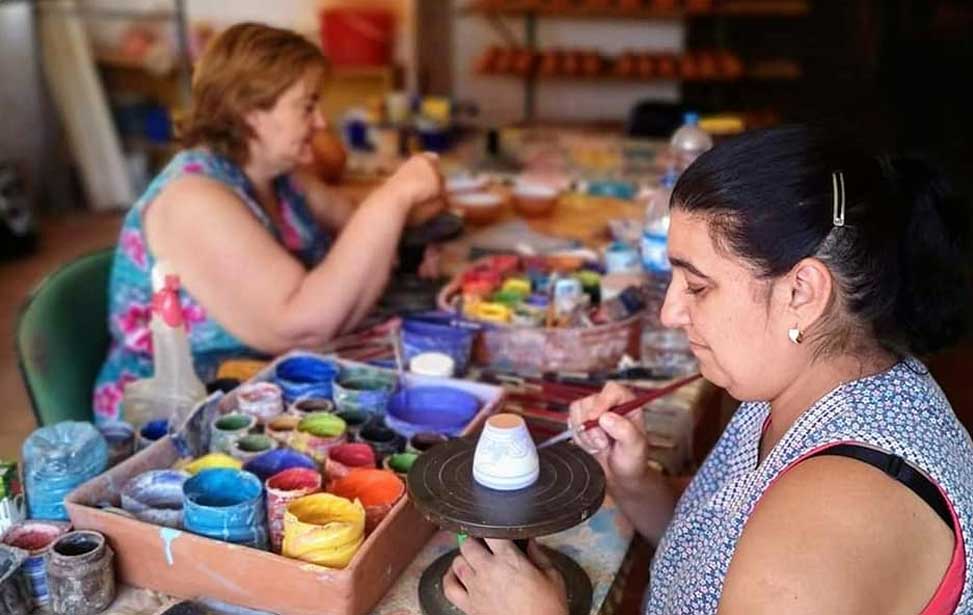
The pretty little Alentejan village of Corval lies a few miles north east of Reguengos de Monsaraz and is home to no less than 32 potteries (Olaria), the largest concentration of potteries in Portugal. Here are a vast array of handicraft shops selling the local style of brightly painted ceramics. The local clay deposits have been prized since ancient times.
In 2015 a visitor centre opened in a former potter's workshop.
Casa do Barro - Centro Interpretativo da Olaria
Tuesday – Sunday: 09h30 – 13h00/14h00 17h30, Monday: CLOSED
Rua do Jardim 32, 7200-132 Corval, Portugal.
38° 26' 47.6" N | 07° 29' 02.9" W | +351 961 248 195
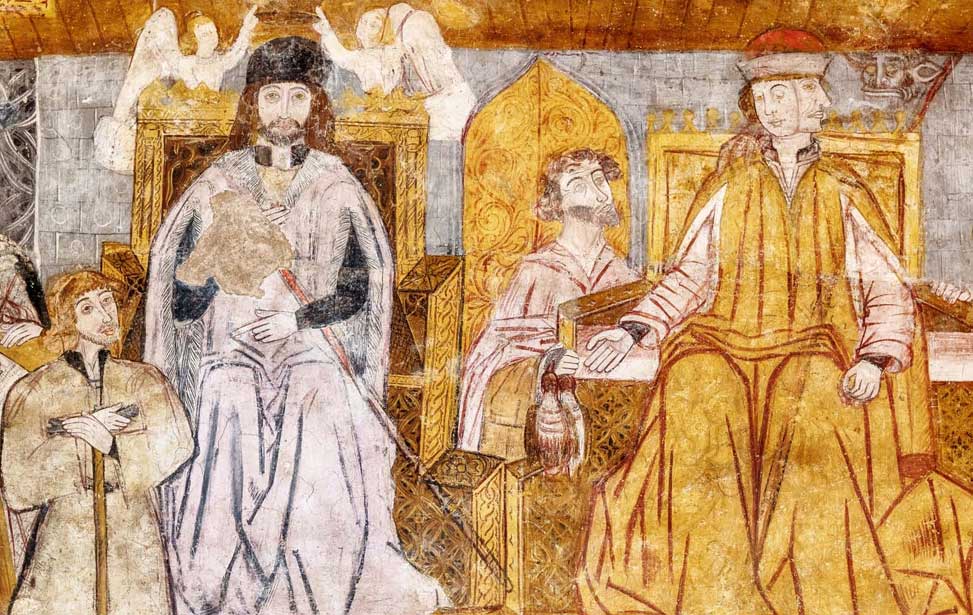
Located in a 14th-century building on the eastern side of Rua Direita. During expansion in the 16th century, some of the building was utilised as a courthouse. It lost its use as a civil building in the late 17th century and it suffered considerable damage during the 1755 earthquake. During renovation work carried out in 1958, a 15th-century fresco was discovered behind a brick wall. Known as "O Bom e o Mau Juiz" (The Good and Bad Judge) the imagery depicts justice and corruption.
In 2010, the Fresco Museum began hosting annual thematic exhibitions which offer visitors the opportunity to ascertain a broader understanding of the history and culture of the region.
Daily: 10h00 - 12h30/14h00 – 18h00
Travessa da Cadeia, Monsaraz, Portugal.
38º 26' 36.1" N | 07º 22' 50.3" W | +351 266 508 040
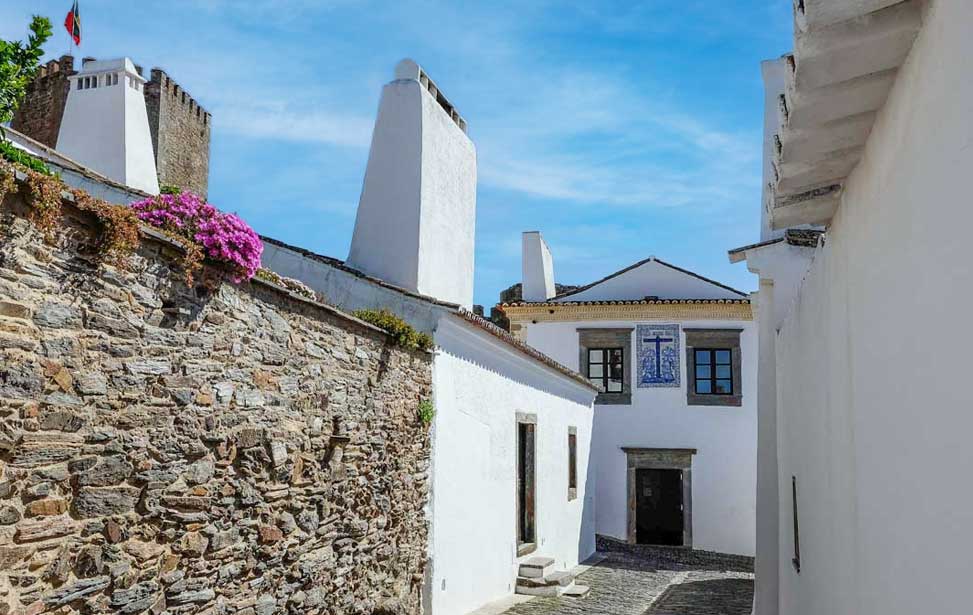
A relic from Portugal's darkest periods in history. Local oral history and patchy evidence suggest this two-storey in the Travessa do Quebra-Costas street was where inquisitors performed their gruesome crafts on their unfortunate victims during the Inquisition. Prisoners were tortured here before being sent to Évora for sentencing by the Court of the Holy Office. From the three Inquisition courts initiated in Portugal - Lisbon, Coimbra and Évora - the Alentejo court was the most active and cruel.
Travessa do Quebra Costas, Monsaraz 7200-175 Portugal.
38º 26' 34.0" N | 07º 22' 54.1" W

The largest and most prestigious Alentejo sub-region has its roots in antiquity and is home to some of the oldest vineyards in the Alentejo. However, wine production as a major local commodity didn't emerge until the end of the 19th century. A commission of important landowners was formed by Manuel Augusto Mendes Papança to purchase large areas of land owned by the crown and divided into small landholdings distributed across the population. This initiative led to the planting of nearly a million vines, precipitating a prodigious development of wine production in only five years. This system of small fragmented vineyards helped to preserve local grape varieties from the scourge of phylloxera in the late 19th century.
The terroir consists of a stony terrain filled with rocky outcrops that make the Reguengos countryside so dramatic. Schist soils and markedly continental climate of freezing winters and boiling summers govern vine growing, yielding full-bodied and powerful wines with good cellaring potential. Over recent decades the area has witnessed international recognition spawning a number of oenotourism opportunities for visitors. Consequently, the Reguengos Sub-Region was nominated the European Wine Capital of 2015.
Herdade do Esporão was established in 1267. Within its grounds, there are three historic monuments: a medieval Tower (Torre do Esporão), the Esporão Arch and the Nossa Senhora dos Remédios Chapel. The Esporão Tower is a demonstration of military defiance and is one of the most important towers in the region. It appears on Esporão wine labels.
The winery was bought in 1973 by Joaquim Bandeira and Dr José Alfredo Parreira Holtreman Roquette. They started an ambitious winemaking venture with a major investment and innovation whilst launching new products other than wine, such as high-quality olive oils, cheese and vinegar. Herdade do Esporão have been a leader in local wine tourism and have created the infrastructure for visitors to enjoy a fascinating visit of the estate, the historic monuments, the vineyards and the impressive cellars. Learn the secrets of wine production with a guided tour of the wineries and the impressive cellars buried 17 metres below the ground where special wines are kept. The tours end in the Wine Bar and put your senses to the test with a wine tasting!
Wine Tours: Monday – Saturday: 10h30 – 19h00, Restaurant: 12h00 – 17h30, Wine Bar: 12h00 – 19h00
31 Herdade do Esporão Apartado, 7200-999 Reguengos de Monsaraz, Portugal.
38° 23' 55.0" N | 07° 32' 45.9" W
+351 268 891 660 | reservas@esporao.com | Website
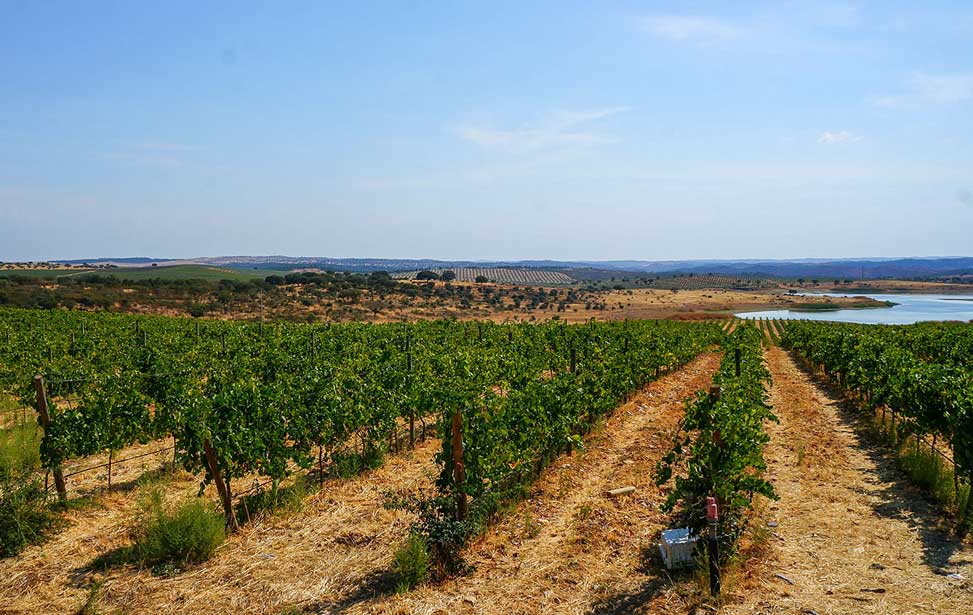
| Reguengos Wine Sub-Region
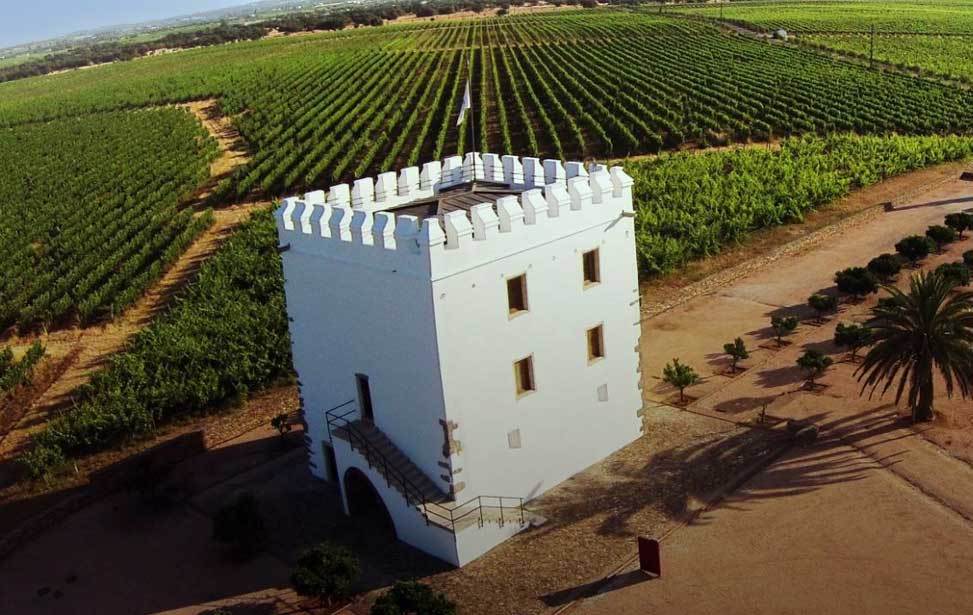
| Herdade do Esporão
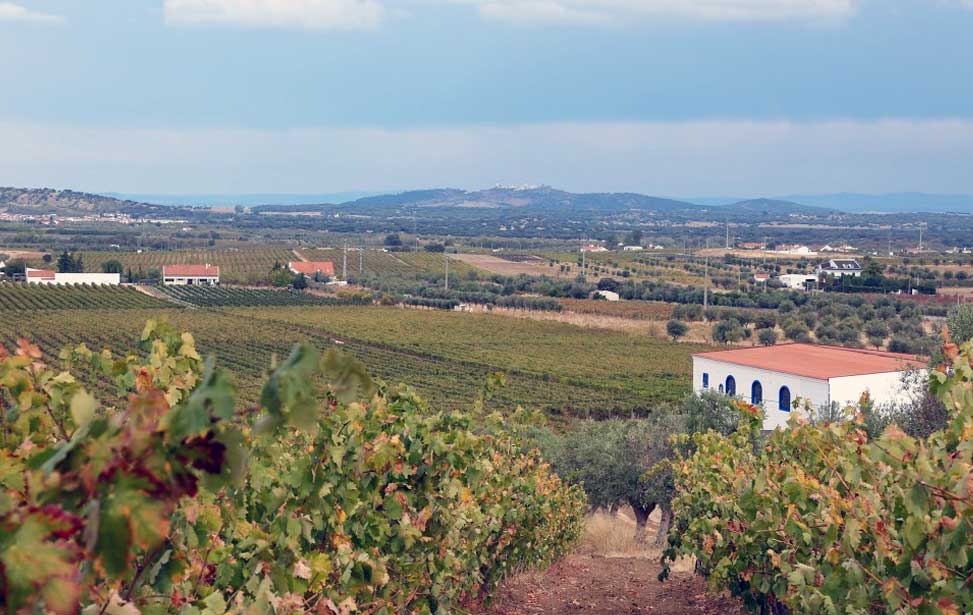
| Adega do Calisto
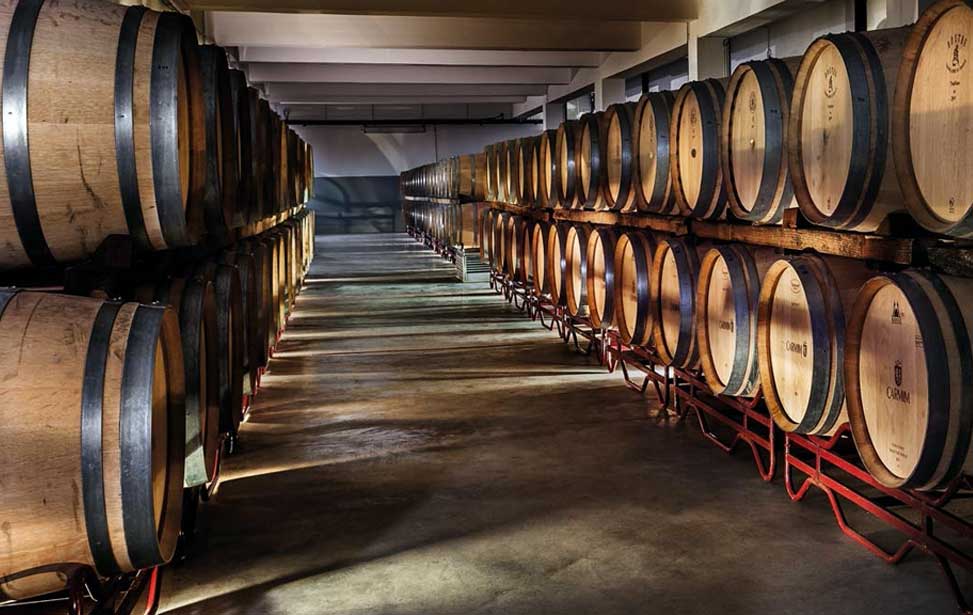
| CARMIM
In the early 1980s, the Calisto family acquired the Quinta da Várzea vineyard northwest of Reguengos de Monsaraz and set about establishing their own brand. Extensive replanting took place using only the best strains of local grape varieties and the vinification machinery was modernised. With passionate consideration Calisto is able to take advantage of the best of both traditional and contemporary wine production methods, as well as excellent environmental attributes, to achieve excellent results. By appointment, it's possible to experience this achievement and sample the end product.
Daily: 09h00 – 19h00
13 Rua da Fonte, 7200 Reguengos de Monsaraz, Portugal. |
38° 26' 10.3" N | 07° 32' 28.6" W
+351 266 502 627 | gvcrm@sapo.pt
In 1971 the CARMIM cooperative was started by sixty wine growers and has grown exponentially into Portugal's most successful, respected and loved wine producer. The quality of the raw materials, deriving from the Reguengos de Monsaraz region is a winning component for this Cooperative, as is the human capital and an 80,000m2 agro-industrial complex endowed with state-of-the-art technology. There is a reception capacity for one million two hundred thousand kilos of grapes per day, bottling of fifteen thousand bottles per hour and storage of up to thirty-two million litres, making CARMIM the largest winery in the Alentejo and also one of the biggest in the country!
Today CARMIM currently has around a thousand members and produces 24 wine labels from whites to reds, from young wines to reserves, not to forget rosés and sparkling wines. CARMIM also produces olive oils of recognised quality. Visits are by appointment only.
Weekdays: 08h30 – 12h30/14h00 – 17h30
Rua Professor Mota Pinto (Estrada para Monsaraz), Edifício Administrativo - Apartado 3 7200-999 Reguengos de Monsaraz, Portugal. |
38° 25' 30.9" N | 07° 32' 03.9" W
+351 266 508 200 | info@carmim.eu | Website

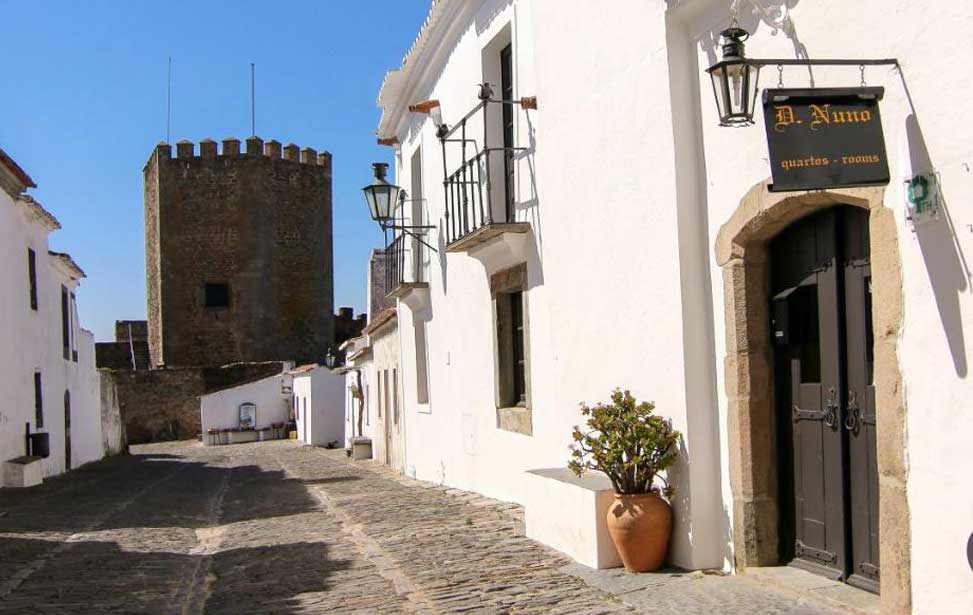
The de Dom Nuno Turismo Habitação (guest house) was one of the first in the region of Monsaraz. The House is located on the main street of Monsaraz and is renowned for its beauty and unique architecture. Things began in the early 80s when Mr Isidro Pinto decided to purchase the house with the help of the family to open a small family hotel. The house was in an advanced state of degradation and after restoration, the family moved to Monsaraz. A Casa Dom Nuno opened to the public for the first time in 1983.
6 Rua José Fernandes Caeiro, 7200-175, Monsaraz, Portugal.
38º 26" 34.3' N | 07º 22"52.7' W
Book Online ►
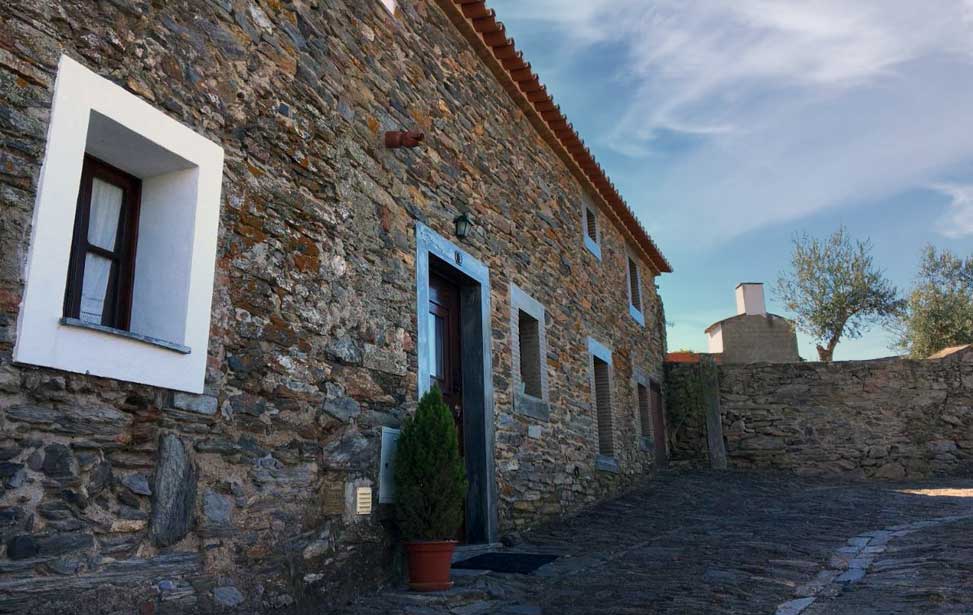
Boasting mountain views, Refúgio da Vila offers accommodation with a garden and a balcony, around 450 yards from Monsaraz Castle. This holiday home features air-conditioned accommodation with a terrace. The holiday home has one bedroom, a bathroom, a flat-screen TV with satellite channels, a dining area, a fully equipped kitchen, and a patio with city views..
Largo São Bartolomeu, Monsaraz 2, 7200-175 Monsaraz, Portugal.
38° 26' 43.9" | N 07° 22' 46.8" W
Book Online ►
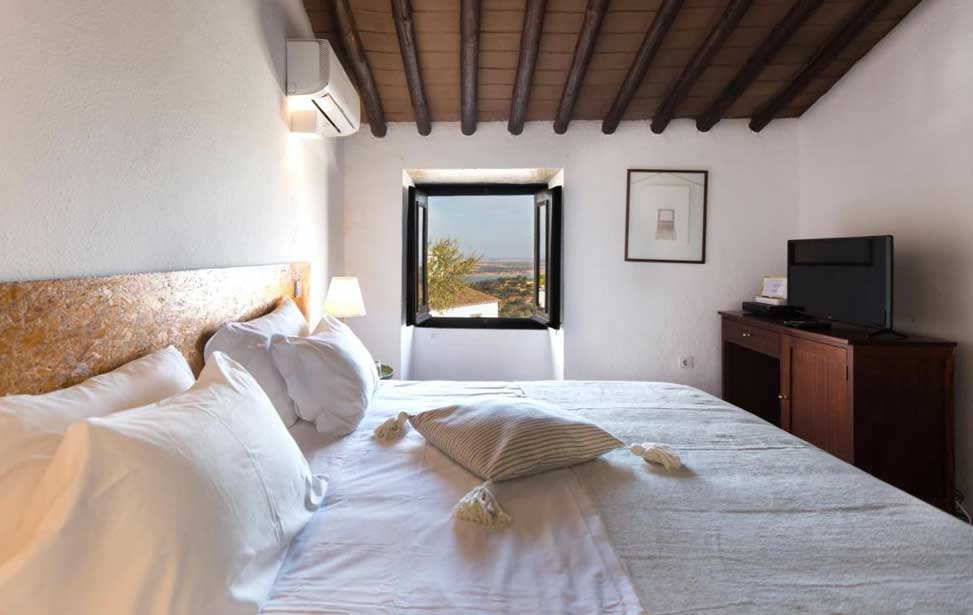
Located in Monsaraz, Estalagem de Monsaraz offers accommodation with free WiFi and flat-screen TV, as well as a shared lounge and a garden. There is a fully equipped private bathroom with a bath and a hairdryer.
Continental and buffet breakfast options are available daily at the country house. Estalagem de Monsaraz has a terrace with amazing views.
5 Largo de São Bartolomeu, 7200-175 Monsaraz, Portugal.
38° 26' 44.0" N | 07° 22' 46.2" W
Book Online ►
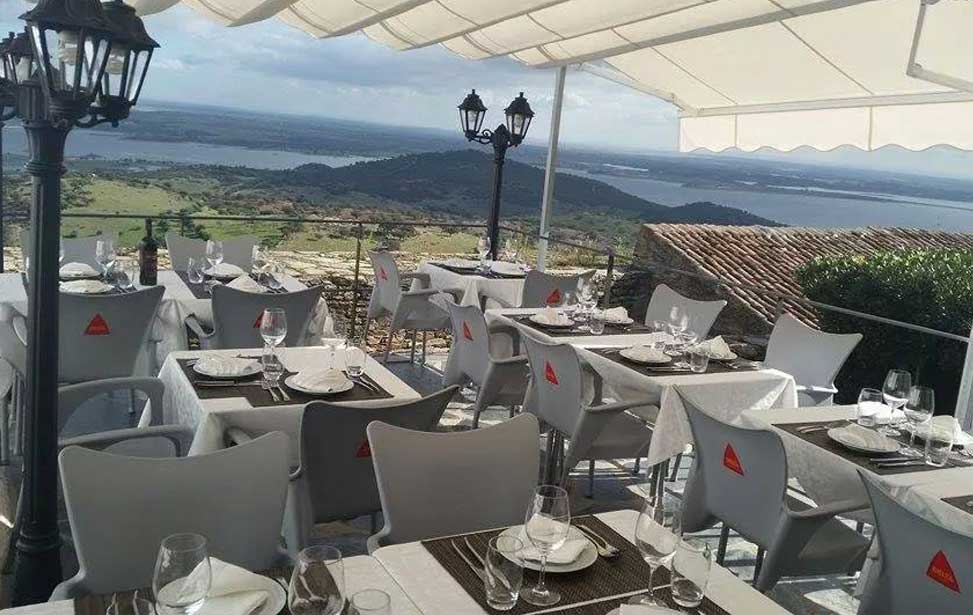
Once through the unassuming front door a glance out the window will blow you away, the views below of lake Alqueva are breathtaking. try to get a table on the terrace if you can. Good, honest old-world courteous service also awaits you. The food is of a good standard with many regional dishes available with a few child friendly options. A great location also to whet the whistle.
Daily: 11h00 - 12h00, Tuesday: CLOSED
22 Rua Direita, Monsaraz 7200-175, Portugal.
38º 26' 38.4" N | 07º 22' 47.7" W | +351 266 557 166
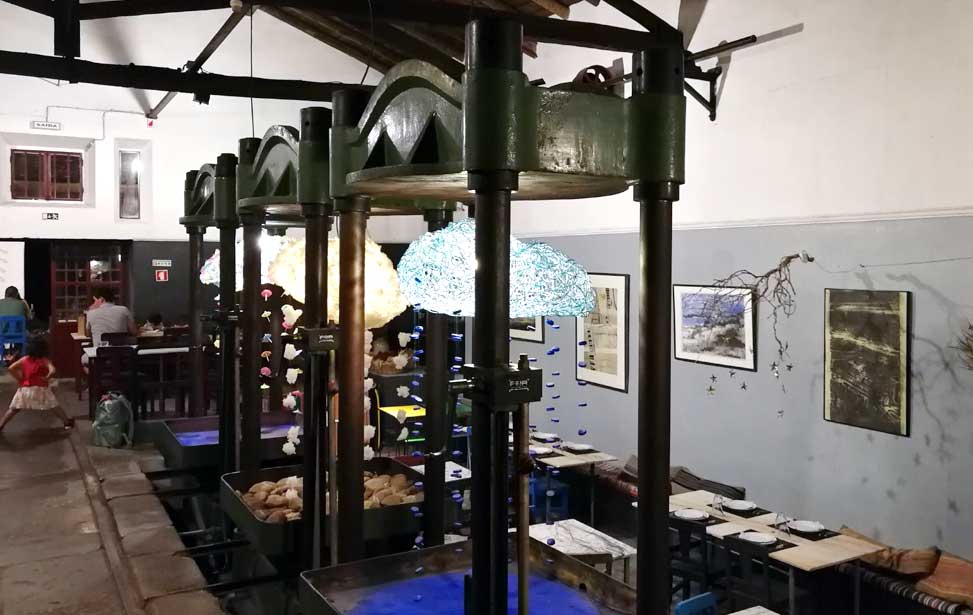
If you like a bit of quirkiness, then this is the place for you. Located a stone's throw north of Monsaraz in the village of Telheiro, this establishment is a former olive press. A "Sem Fin" is the name for the Archimedes' screw-type mechanism that transported the grapes into the press. The machinery and articles from the restaurants previous incarnation add a nice themed touch without being overtly kitsch. On the menu are wonderful creations which are twists on regional specialities. At the rear, there is an art gallery for your pleasure. Sem Fim is a popular stop for coach tours and can get busy at peak times. There's also an adjoining tavern where events such as live music, olive oil and wine tasting and sampling other local delights.
Daily: 11h00 - 02h00, Thursday: CLOSED
6A Rua das Flores, Telheiro, 7200-181 Monsaraz, Portugal.
38º 27' 15.0" N | 07º 22' 54.3" W | +351 962 653 711 | tiago@sem-fim.com | Website
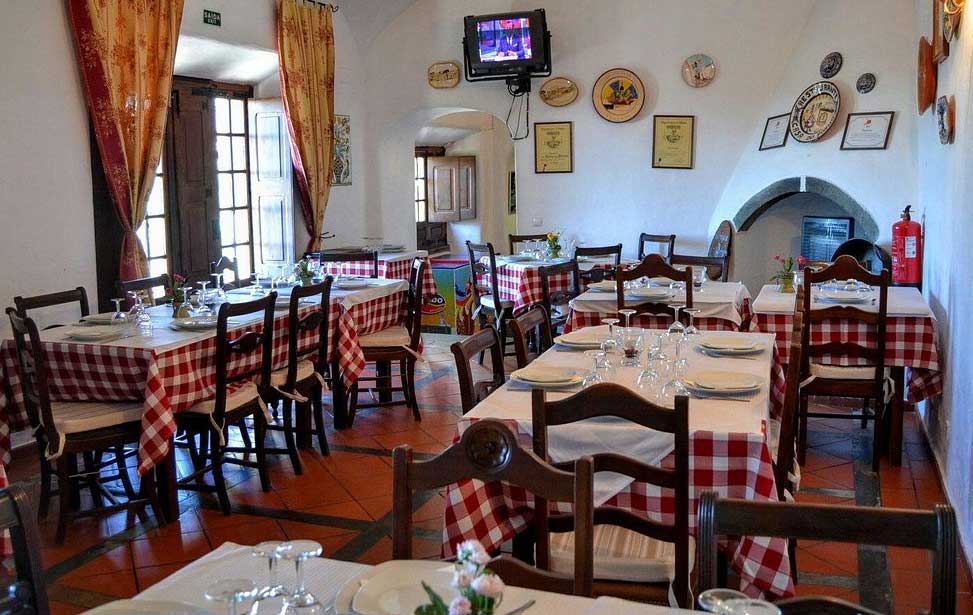
A great selection of locally sourced produce cooked in traditional ways, served in generous portions by friendly and helpful staff. The interior is pleasant yet unobtrusive however the outside terrace is where the great views are.
Daily: 12h00 - 21h30
Travessa Sonabre, Monsaraz 7200-175, Portugal.
38º 26' 36.3" N | 07º 22' 50.7" W | +351266 104 008 | casadoforno@hotmail.com
Lisbon airport is 183 km (113 miles) West of Monsaraz: Lisbon GET A GREAT DEAL ON FLIGHTS:
|
|
Monsaraz is entered via the M514which joins the N256 at Reguengos de Monsaraz, which runs west onto the A6 highway once past Évora to connections to Lisbon and beyond. The N256 also runs east to Mourão.. GET A GREAT DEAL ON CAR HIRE:
|
|
| Rodoviária do Alentejo run coach services all over the Alentejo and beyond, linking the region to major cities within Central and Southern Portugal, including coaches to Évora and Estremoz: Website |

2024 © Delahay & Co. All rights reserved | Privacy Policy


 Lisbon Card